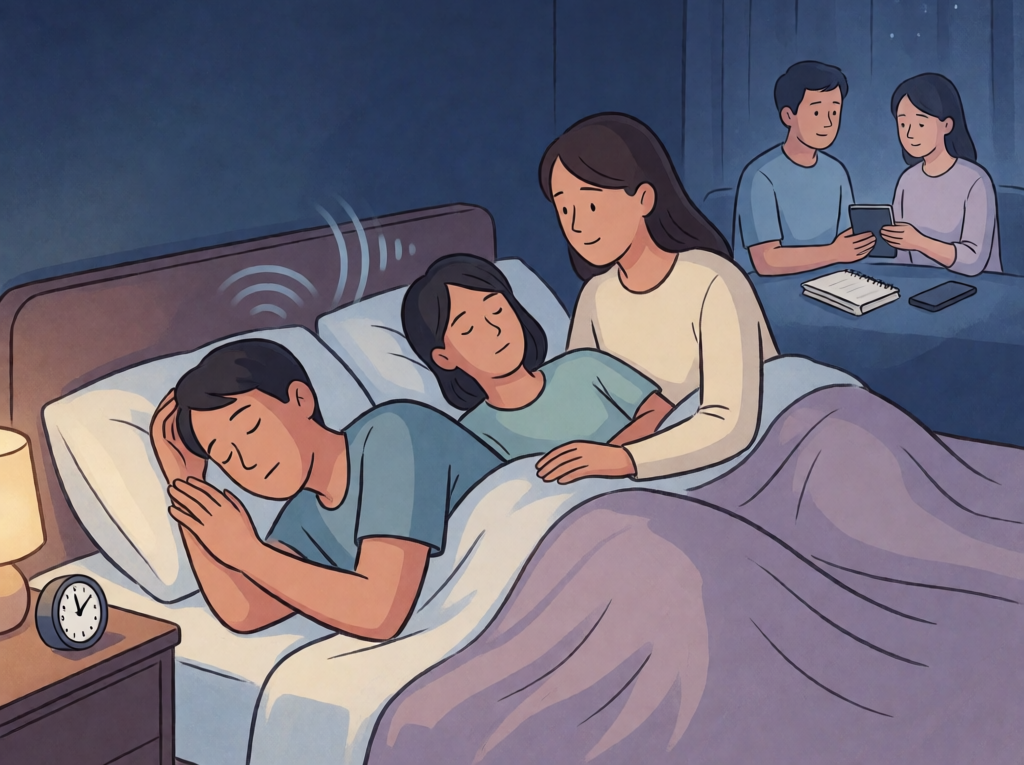
Snoring can turn bedtime into a source of stress. If you snore, you may wake feeling embarrassed, tired, or concerned about what is happening while you sleep. If you share a bed with someone who snores, the sound can leave you lying awake, watching the clock, and dreading another restless night.
It is easy to dismiss snoring as simply an annoying habit. Sometimes it is just that: a temporary issue caused by a cold, allergies, an awkward sleep position, or an especially exhausting week. But regular, loud snoring can also be a sign that breathing is becoming restricted during sleep.
Understanding the difference matters. A quieter night is valuable, but so is making sure you are breathing well enough to get the restorative rest your body needs.
What Actually Causes Snoring?
During sleep, the muscles in your throat, tongue, and mouth relax. For some people, these relaxed tissues partly narrow the airway. When air moves through that smaller space, the tissues can vibrate and create the sound of snoring.
Snoring may be soft and occasional, or loud enough to be heard through a wall. The volume alone does not always tell you how serious it is, but frequent loud snoring is worth noticing—particularly when it comes with other symptoms.
Several factors can make snoring more likely:
- Sleeping on your back
- Nasal blockage from colds, allergies, or sinus problems
- Drinking alcohol in the evening
- Smoking or exposure to smoke
- Being overtired
- Some sleeping medicines or sedatives
- Weight changes
- Pregnancy
- Age-related changes in throat muscle tone
- The shape of the nose, jaw, mouth, or throat
You may notice that snoring is worse at certain times of year, after late nights, or when you are congested. Keeping track of these patterns can help you identify changes that may make a difference.
Why Sleeping Position Can Change Everything
For many people, snoring is much worse when lying on the back. In this position, gravity can allow the tongue and soft tissues at the back of the throat to move backwards, reducing the space available for air to pass through.
Side sleeping may help keep the airway more open. It is one of the simplest changes to try, and it does not require buying expensive equipment.
If you naturally roll onto your back during the night, you could try:
- Hugging a body pillow
- Placing a pillow behind your back for support
- Using a wedge pillow if it feels comfortable
- Arranging pillows to make side sleeping feel more secure
- Raising the head of the bed slightly, if practical
Comfort is important. A position that causes neck pain, shoulder discomfort, or frequent waking is unlikely to be sustainable. Give yourself time to find what feels supportive rather than forcing an uncomfortable setup.
Nasal Congestion and Mouth Breathing
When your nose feels blocked, you may breathe through your mouth more often during sleep. This can dry out your throat and make snoring louder.
Seasonal allergies, dust, pet dander, colds, and dry air can all contribute to nasal congestion. While the right solution depends on the cause, a few gentle steps may be worth trying:
- Wash bedding regularly
- Keep the bedroom clean and well ventilated
- Shower before bed during high-pollen periods
- Use saline spray or a saline rinse if appropriate for you
- Avoid sleeping with windows open if pollen is a known trigger
- Consider whether pets in the bedroom affect your symptoms
If you use nasal sprays, take care with medicated decongestant sprays. Using some types for too long can make congestion worse. A pharmacist or healthcare professional can advise you on safe options.
Evening Habits That Can Make Snoring Worse
What happens before bed can affect nighttime breathing.
Alcohol, particularly close to bedtime, can relax throat muscles and increase snoring. If you are trying to work out whether alcohol is playing a role, try having several alcohol-free evenings and compare how you feel the next morning.
Smoking can irritate and inflame the airways, which may also contribute to snoring. Reducing or stopping smoking can benefit breathing in many ways, and support is available if you want help making that change.
Being sleep deprived may make snoring worse too. When you are extremely tired, you can fall into deeper sleep more quickly, and the muscles around the airway may relax further. A steady bedtime and wake-up time can be helpful, even if perfection is not realistic.
Try building a short routine that signals the end of the day:
- Put away work or stressful tasks where possible.
- Dim lights and reduce bright screens.
- Prepare clothes, meals, or a to-do list for the next day.
- Choose a quiet activity, such as reading or listening to calm audio.
- Go to bed when you feel sleepy rather than staying up until you are overtired.
Small routines can be easier to keep than a complete lifestyle overhaul.
When Snoring Could Be a Sign of Sleep Apnoea
Sleep apnoea is a condition in which breathing becomes repeatedly reduced or stops for short periods during sleep. The most common form, obstructive sleep apnoea, occurs when the airway temporarily closes or narrows.
The person sleeping may not remember these events. Often, a partner or family member notices pauses in breathing, followed by a gasp, snort, or loud breath.
Snoring does not automatically mean sleep apnoea. However, it is important to seek medical advice if snoring is accompanied by any of the following:
- Breathing pauses during sleep
- Choking, gasping, or snorting awake
- Loud snoring on most nights
- Waking with a dry mouth or sore throat
- Morning headaches
- Frequent nighttime waking
- Excessive daytime sleepiness
- Difficulty concentrating
- Low mood or irritability
- Falling asleep unintentionally during the day
- High blood pressure
- Waking unrefreshed despite enough time in bed
Do not ignore severe daytime sleepiness, especially if it affects driving. If you feel drowsy at the wheel, stop driving and seek medical advice.
A healthcare professional can assess your symptoms and decide whether you may benefit from a sleep study or other testing. In some cases, monitoring can be completed at home. The goal is not to alarm you—it is to understand your breathing and make sure you get the right support.
Can Snoring Products Help?
There is no shortage of snoring products online. You may see nasal strips, mouth tapes, throat sprays, pillows, chin straps, and mouthpieces all claiming to provide a quick solution.
Some products may help certain people with mild snoring, especially when congestion or sleep position is involved. But it is important to be realistic about their limits.
A product cannot replace a medical assessment if you have breathing pauses, gasping, severe tiredness, or other possible signs of sleep apnoea.
Be especially cautious with products that:
- Promise a permanent cure overnight
- Claim to treat sleep apnoea without medical care
- Encourage you to block or tape your mouth shut
- Have no clear safety information
- Cause pain, jaw discomfort, or difficulty breathing
- Make you feel more anxious about falling asleep
Dental devices designed to move the jaw forward can be useful for some people, but they should be assessed and fitted by an appropriately qualified dental or sleep professional. An ill-fitting device may create tooth, jaw, or bite problems.
How to Talk About Snoring With a Partner
Snoring can be a sensitive subject. The person who snores may feel embarrassed or defensive, while the person kept awake may feel exhausted and frustrated.
Try to raise the subject at a calm time during the day, not at 3 a.m. after a difficult night. Use supportive language and focus on shared wellbeing.
You could say:
“I’ve noticed your snoring has become louder, and sometimes it sounds like you are struggling to breathe. I’m worried about you and think it would be worth speaking to someone about it.”
If sleep has become difficult for both of you, temporary solutions such as earplugs, white noise, or sleeping separately on occasion may help protect rest. These can be practical short-term choices, but they should not be used to avoid getting medical advice when warning signs are present.
A Better Night Begins With the Right Next Step
Snoring is common, and it is not always a serious problem. Simple measures—such as side sleeping, managing nasal congestion, reducing alcohol before bed, and keeping a regular routine—may improve mild snoring.
But if snoring is loud, persistent, or paired with gasping, choking, breathing pauses, morning headaches, or strong daytime tiredness, it is time to speak with a healthcare professional.
You deserve more than simply getting through the night. Paying attention to your breathing can help you move towards quieter sleep, more energy during the day, and greater confidence that your body is getting the rest it needs.