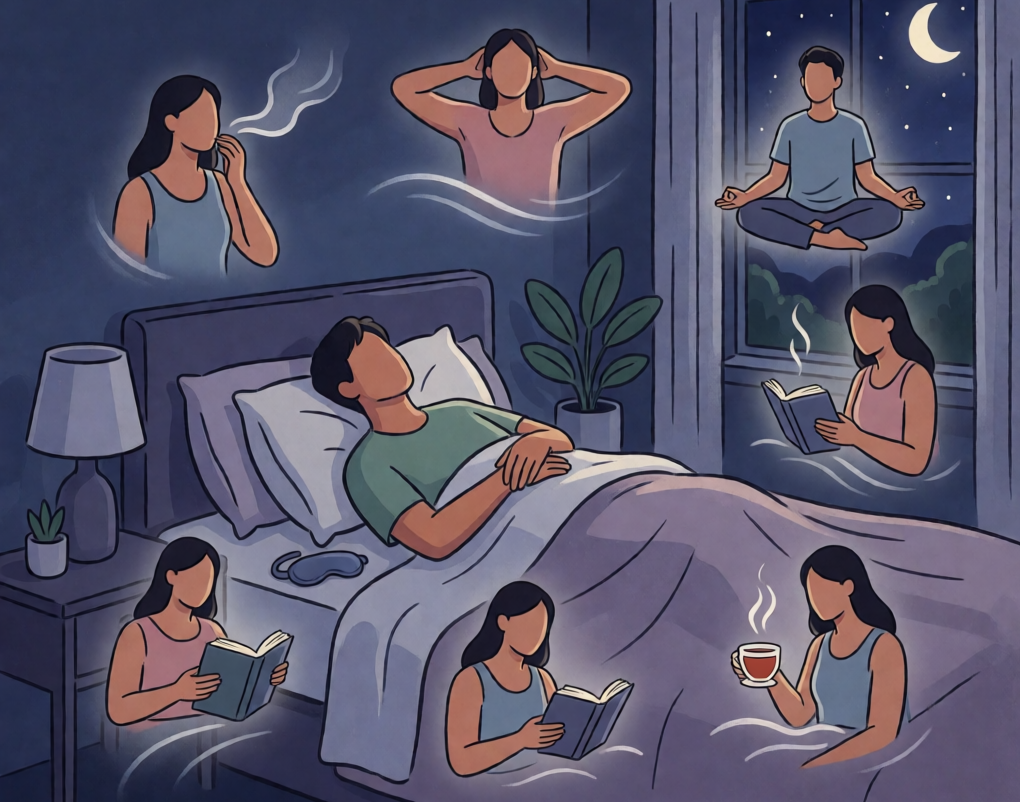
A tired body does not always mean a sleepy mind.
You may feel exhausted after a long day, yet the moment you get into bed, your thoughts become louder. You replay conversations, think about work, worry about tomorrow, or suddenly remember everything you forgot to do. The more you try to force sleep, the more alert and frustrated you may feel.
This is a common experience. Stress, busy schedules, family responsibilities, money worries, health concerns, and constant phone notifications can make it difficult to slow down. A calmer night often starts before your head reaches the pillow.
Relaxation is not about clearing your mind perfectly or making every worry disappear. It is about giving your body and mind regular signals that the day is ending and it is safe to rest. Small, repeatable habits can make that transition feel easier over time.
Why a Busy Mind Can Keep You Awake
Your brain is designed to notice problems and keep you alert when something feels important or uncertain. That can be useful during the day. At night, however, it can leave you lying awake when you need rest most.
Stress can affect sleep in several ways:
- Thoughts may race when the room becomes quiet.
- You may feel physically tense in your shoulders, jaw, or stomach.
- Checking the time can create pressure to fall asleep quickly.
- Worrying about tomorrow can make your heart beat faster.
- Poor sleep can then make stress feel harder to handle the next day.
This can become a frustrating pattern: stress affects sleep, and lack of sleep makes everyday stress feel bigger. Breaking the cycle does not require a perfect routine. Often, it begins with one calming practice you can realistically do most nights.
Create a Gentle Wind-Down Routine
A wind-down routine is simply a short series of calming activities before bed. It helps separate daytime demands from sleep.
Try to give yourself 20 to 60 minutes between your busiest tasks and bedtime when possible. The exact length matters less than consistency. Your routine could be as simple as washing your face, putting your phone away, dimming the lights, and reading a few pages of a book.
Choose activities that feel quiet rather than stimulating. For example:
- Take a warm shower or bath.
- Change into comfortable sleepwear.
- Make a caffeine-free herbal drink, if it suits you.
- Read something light and relaxing.
- Listen to calm music, nature sounds, or a gentle podcast.
- Do a few easy stretches.
- Write down tomorrow’s tasks.
- Sit quietly with low lighting for a few minutes.
You do not need to do all of these. In fact, keeping your routine simple makes it more likely that you will continue it.
Give Your Worries Somewhere Else to Go
Many people find that worries become strongest at bedtime because it is the first quiet moment of the day. Instead of trying to solve everything in bed, try setting aside a short “worry time” earlier in the evening.
Spend 10 minutes writing down what is on your mind. You might divide a page into two columns:
| What is worrying me? | One small next step |
|---|---|
| I have too much to do tomorrow. | Write a short priority list. |
| I am worried about an email. | Reply after breakfast. |
| I might forget something important. | Add it to my calendar. |
Not every problem will have an immediate answer. That is okay. The goal is not to fix your whole life before sleep. It is to remind your mind that the concern has been noticed and does not need to be repeatedly rehearsed in bed.
Keep a notebook beside the bed as well. If a thought appears after the lights are out, write down a few words and return to resting. This may feel more helpful than reaching for your phone and opening emails, messages, or social media.
Try Slow Breathing
Slow breathing can help ease the physical feeling of stress. When you are anxious, breathing often becomes quicker and shallower. Slowing it down may help your body move toward a calmer state.
One simple option is to make your exhale slightly longer than your inhale:
- Breathe in gently through your nose for a count of 4.
- Breathe out slowly for a count of 6.
- Repeat for one to three minutes.
There is no need to take huge breaths or count perfectly. Keep it comfortable. If counting makes you feel tense, simply focus on breathing slowly and letting your shoulders soften as you breathe out.
Another helpful approach is to notice where you are holding tension. With each exhale, relax your forehead, unclench your jaw, lower your shoulders, and loosen your hands.
Use a Body Scan to Release Tension
Stress is not only mental. It often shows up in the body without us noticing. A body scan is a quiet practice that brings attention to different areas of your body, one at a time.
While lying in bed, begin at your toes and gradually move upward:
- Notice your toes and feet.
- Let your calves and thighs become heavy.
- Soften your stomach.
- Relax your hands and arms.
- Drop your shoulders away from your ears.
- Unclench your jaw.
- Let your eyelids rest.
You are not trying to make yourself sleep. You are simply noticing what is there and allowing your body to become more comfortable. If your mind wanders, gently bring your attention back to the next part of your body.
This can be especially useful after a day spent sitting at a desk, carrying children, driving, exercising, or feeling emotionally stretched.
Make Your Bedroom Feel Less Demanding
Your bedroom does not need to look like a luxury hotel to support relaxation. A few practical changes can make it feel more peaceful.
Consider whether your space is helping or distracting you:
- Keep lighting soft in the hour before bed.
- Reduce clutter around the bed where possible.
- Choose bedding and sleepwear that feel comfortable.
- Keep the room at a temperature that suits you.
- Use curtains, an eye mask, earplugs, or white noise if light and sound disturb you.
- Put your phone out of easy reach if it encourages late-night scrolling.
Your bed should gradually become associated with rest. If possible, avoid doing work, paying bills, or dealing with stressful messages while in bed. This may help create a clearer boundary between daytime problem-solving and nighttime rest.
Be Careful With Late-Night Scrolling
It is understandable to reach for your phone when you cannot sleep. It can feel like a distraction from worrying. Yet social media, news, work messages, shopping, and endless videos can make the mind more active rather than calmer.
Screens can also expose you to bright light late at night, which may make it harder for some people to feel sleepy.
You do not have to ban technology completely. A more realistic step may be to set a gentle boundary:
- Put your phone on charge outside the bedroom.
- Switch on “Do Not Disturb” at a set time.
- Use an ordinary alarm clock instead of your phone.
- Replace 15 minutes of scrolling with music, reading, or stretching.
- If you use your phone for sleep sounds, avoid opening apps that pull you into messages or feeds.
Even a small reduction in late-night screen time may help create a quieter end to the day.
When You Cannot Switch Off
Some nights will still be difficult. That does not mean your routine has failed.
If you have been awake for a while and feel increasingly frustrated, it may help to leave the bed briefly. Go somewhere dim and quiet, and do something calm such as reading a few pages of a book or listening to gentle audio. Return to bed when you feel sleepier.
Try not to keep checking the clock. Watching the minutes pass can increase pressure and make relaxation harder.
It can also help to replace the thought “I must fall asleep now” with something kinder, such as: “I am giving my body time to rest.” Resting quietly is still more helpful than battling with yourself.
Small Changes Can Add Up
A calm mind is not something you can switch on instantly after a stressful day. It is often built through small signals repeated over time: dimmer lights, slower breathing, a written to-do list, a comfortable bed, and a moment away from your phone.
Start with one change that feels manageable this week. Perhaps it is writing down tomorrow’s tasks, doing two minutes of slow breathing, or creating a regular time to put your phone away.
Better sleep does not always come from doing more. Sometimes it starts with allowing yourself a little more quiet, comfort, and patience at the end of the day.