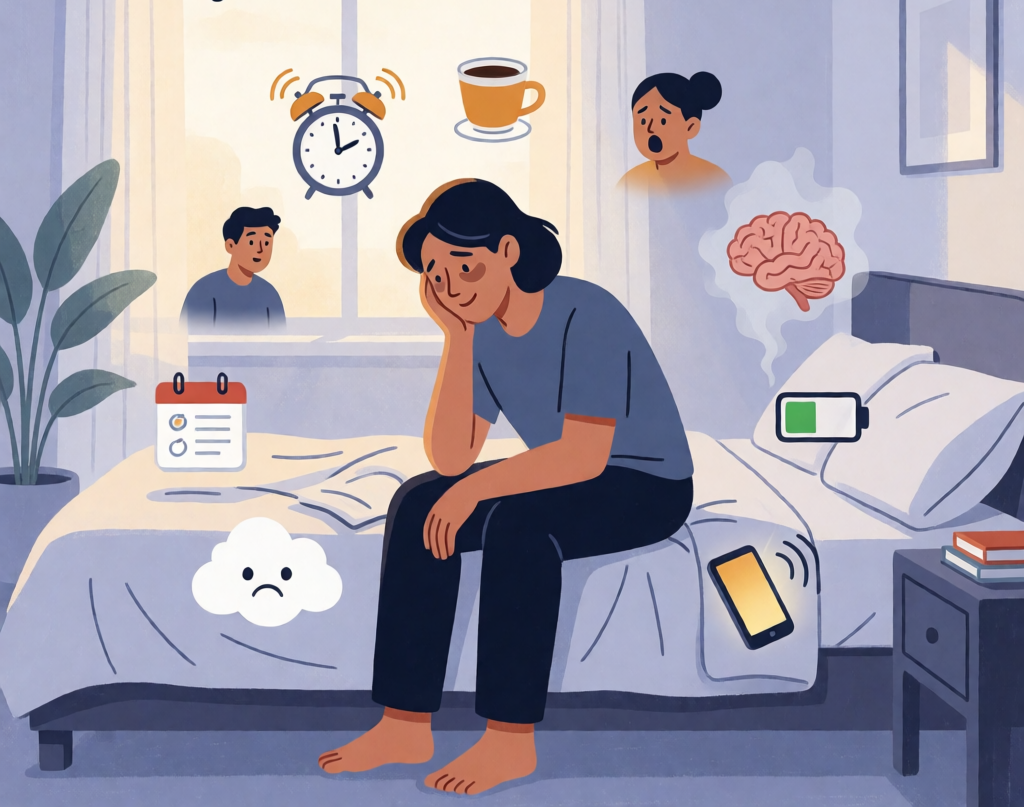
Sleep problems can make even ordinary days feel much harder. After a restless night, it may be difficult to think clearly, manage stress, stay patient, or find the energy for work, family, and everyday tasks. You might lie awake for hours, wake several times during the night, wake far too early, or sleep for what seems like long enough but still feel exhausted.
Occasional poor sleep is common. A stressful week, illness, travel, noise, or a change in routine can all disrupt rest for a few nights. But when sleep problems happen often, they can become frustrating and tiring very quickly.
The good news is that small, realistic changes can sometimes make a meaningful difference. Understanding what may be affecting your sleep is a useful first step.
Common Sleep Problems
Sleep difficulties do not look the same for everyone. Some people struggle to fall asleep, while others fall asleep easily but cannot stay asleep. Here are some of the most common patterns.
Difficulty falling asleep
You feel tired, get into bed, turn off the light—and suddenly your mind becomes busy. You may replay conversations, worry about tomorrow, make mental lists, or keep checking the time.
This can happen when your body is tired but your mind is still alert. Stress, late-night screen use, caffeine, irregular bedtimes, and trying too hard to sleep can all make it more difficult to settle.
Waking during the night
Brief awakenings are normal. Most people wake slightly between sleep cycles without fully noticing. The problem is when you wake fully and struggle to get back to sleep.
Night waking can be linked to noise, light, a bedroom that is too warm or cold, discomfort, needing the toilet, stress, pain, reflux, pets, or a partner’s movement or snoring. Sometimes there is no obvious cause, which can feel especially frustrating.
Waking too early
Waking before your alarm occasionally is not always a concern. But consistently waking much earlier than planned and being unable to return to sleep can leave you short on rest.
Early waking may happen during stressful periods, after changes to routine, or when worries begin as soon as you open your eyes. It can also be associated with low mood and other health concerns, so speak with a healthcare professional if it is frequent or affecting your daily life.
Feeling tired despite enough time in bed
Spending eight or nine hours in bed does not always mean you are getting restorative sleep. Sleep quality matters as well as sleep duration.
If you regularly wake feeling unrefreshed, experience strong daytime sleepiness, snore loudly, wake gasping or choking, or have morning headaches, it is important to seek medical advice. These can sometimes be signs of a sleep-related breathing problem or another condition that needs proper assessment.
Why Sleep Problems Can Become a Cycle
A difficult night often creates pressure for the next one. After sleeping badly, it is natural to worry: What if it happens again tonight? How will I cope tomorrow?
Unfortunately, this worry can keep the mind alert at bedtime. You may start watching the clock, calculating how little sleep is left, or spending more and more time in bed trying to force sleep. The bedroom can gradually begin to feel connected with frustration rather than rest.
Poor sleep can also lead to habits that seem helpful in the moment but may make nights harder later. For example:
- Taking long naps late in the afternoon
- Drinking extra coffee or energy drinks to get through the day
- Going to bed much earlier than usual to “catch up”
- Using a phone in bed to distract yourself from worry
- Sleeping in very late after a bad night
There is no need to do everything perfectly. The aim is simply to create more consistent signals that help your body recognise when it is time to wind down and when it is time to be awake.
Everyday Factors That Can Affect Sleep
Many sleep problems have more than one cause. Looking at your routine, sleep environment, and stress levels may help you spot patterns.
Stress and an overactive mind
Work demands, money concerns, relationship difficulties, family responsibilities, and health worries can all follow you into bed. When the day finally becomes quiet, your thoughts may become louder.
A short wind-down period can help create some space between daytime demands and sleep. This does not have to be complicated. You might try reading something light, listening to calm music, taking a warm shower, doing gentle stretches, or writing down tomorrow’s tasks before bed.
Caffeine, alcohol, and nicotine
Caffeine can remain in the body for hours. If you are sensitive to it, coffee, tea, cola, energy drinks, pre-workout supplements, and even chocolate later in the day may affect how easily you fall asleep.
Alcohol can make some people feel sleepy at first, but it may lead to lighter, more disrupted sleep later in the night. Nicotine is also stimulating and can interfere with rest.
You do not necessarily need to cut everything out at once. Start by noticing your timing and consider reducing caffeine later in the day.
An uncomfortable bedroom
Your bedroom does not need to be picture-perfect, but comfort matters. A room that is too bright, noisy, warm, cold, cluttered, or uncomfortable can make it harder to settle.
Helpful adjustments may include:
- Keeping the room comfortably cool and well ventilated
- Using curtains, blinds, an eye mask, or earplugs if suitable
- Choosing bedding that feels comfortable for the season
- Reducing notifications, bright lights, and unnecessary noise
- Checking whether your pillow and mattress still provide adequate support
If you share a bed, small changes such as separate duvets, a fan for background sound, or discussing different sleep schedules can sometimes improve comfort for both people.
Irregular routines
Your body has a natural daily rhythm. Frequent changes to bedtime and wake-up time can make that rhythm less predictable.
A regular wake-up time is often one of the most useful places to start. Even if sleep was not ideal, getting up around a similar time each morning can help build a more stable pattern over time. Try not to expect instant results—sleep routines usually need consistency and patience.
Practical Ways to Support Better Sleep
There is no single solution that works for everyone, but these gentle strategies are worth trying.
Build a simple wind-down routine
Give yourself 30 to 60 minutes before bed to slow down. Choose activities that feel calm rather than demanding. Keep it realistic enough that you can do it most nights.
For example:
- Put tomorrow’s essential tasks on paper.
- Dim the lights and put your phone on charge away from the bed.
- Wash, shower, or change into comfortable clothes.
- Read a few pages of a book or listen to something quiet.
- Get into bed when you feel sleepy rather than simply because the clock says you should.
Get daylight during the day
Natural daylight, especially earlier in the day, helps support your body clock. A short walk outdoors in the morning or lunchtime can be useful, even on cloudy days.
Regular movement can also support sleep. You do not need an intense workout—walking, gardening, cycling, stretching, or other activity you enjoy can all count.
Avoid clock-watching
Seeing the time repeatedly can increase stress. If possible, turn the clock away or keep your phone out of reach. The goal is to focus less on calculating sleep and more on allowing your body to rest.
If you cannot sleep, reduce the struggle
Lying awake for a long time while becoming more frustrated can make the problem feel bigger. If you feel wide awake, consider getting out of bed briefly and doing something calm in dim light, such as reading a quiet book. Return to bed when you feel sleepy again.
Try to avoid using this time for work, social media, emails, or anything emotionally stimulating.
When to Seek Professional Support
Self-help strategies can be useful, but some sleep problems need medical support. Speak with a qualified healthcare professional if sleep difficulties are ongoing, severe, or affecting your ability to function safely during the day.
Seek advice promptly if you experience:
- Loud snoring, gasping, choking, or pauses in breathing during sleep
- Severe daytime sleepiness, especially when driving or working
- Persistent insomnia lasting weeks or months
- Frequent nightmares, unusual movements, or behaviours during sleep
- Morning headaches, chest pain, or breathlessness
- Sleep problems connected with anxiety, depression, pain, medication, or another health condition
You deserve support. Sleep difficulties are common, and getting help is not a sign that you have failed to manage things on your own.
Start With One Manageable Change
Trying to fix your sleep all at once can feel overwhelming. Choose one small change that fits your life: make your bedroom slightly cooler, move caffeine earlier, take a short morning walk, write down worries before bed, or keep a steadier wake-up time.
Better sleep is rarely about finding a perfect routine. It is about learning what helps you feel calmer, more comfortable, and more ready for rest—one night at a time.